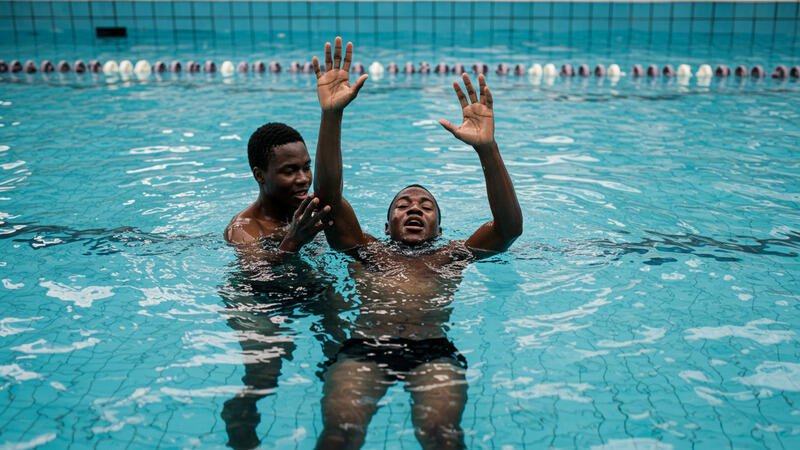

Many people are often in the pool at the same time. Some are swimming, others are playing near the edge, and some are simply standing in the water. From a distance, everything looks fine.
However, for a lifeguard, it is not enough to simply see that people are in the water; they must also observe what each person is doing.
Sometimes a swimmer gets tired. A child might wander into deeper water. Or, someone might be struggling in the water but unable to call out for help. This is where water surveillance becomes essential.
What Does Water Surveillance Actually Mean?
Water surveillance means more than just looking at the pool. A lifeguard constantly monitors the swimmers, the water, and the surrounding pool area. They observe who is swimming well, who is tiring, who might be breaking rules, or if there is anything present that could potentially cause a problem later.
According to the CDC, drowning can occur in just a few seconds and is often silent. Therefore, close and constant supervision near the water is crucial.
The advantage of a lifeguard’s vigilance is that they do not have to wait for a situation to escalate into a major crisis; if something seems amiss, they can intervene immediately.
Not Every Swimmer Looks Like They Need Help
It might seem simple, but the condition of every person in the pool isn’t always immediately apparent.
Someone might be silent in the water. Another person might be pausing frequently. A child playing might drift far from their original spot.
To an outside observer, these actions might appear normal. The difference for a lifeguard is that they are observing the swimmer’s typical behavior. If there is a sudden change, they can notice it.
Drowning does not always manifest with screaming or frantic waving; as the CDC notes, drowning is often silent.
A Small Change Can Attract Attention
Imagine a swimmer has been swimming leisurely for a while. Suddenly, they grab the edge of the pool and stay there. They might simply be tired. However, they could also be in need of assistance.
A lifeguard shouldn’t immediately treat every incident as an emergency; they must first assess the situation. Yet, unusual behavior should not be ignored either.
This is the essence of water surveillance: observing, interpreting, and taking action when necessary.
Busy Pools Require More Attention
Maintaining surveillance in a busy pool is challenging. Children move about, people swim in close proximity, and some play in the water while others dive.
In such moments, if a lifeguard’s attention drifts, something important could be missed. CDC guidelines also emphasize the need for lifeguards to remain focused on swimmers and avoid distractions.
When a lifeguard is on duty, one of their most critical responsibilities is knowing exactly what is happening in the water.
Observing Behavior Is Also Important
Water surveillance goes beyond merely watching how someone swims. Behavior can reveal a great deal.
For instance, a child might repeatedly head toward the deep end, a swimmer might continue despite exhaustion, or someone might be ignoring pool rules.
These situations may not be emergencies right now, but they could escalate into problems later. A lifeguard’s job isn’t to stop people over every minor detail; they must distinguish between normal activity and situations that genuinely require attention.
The Pool Area Matters Too
A lifeguard’s focus shouldn’t be limited to the water. There are people on the pool deck as well—children sitting or playing, and individuals who might slip and fall. Someone might stand in a spot from where they could suddenly fall into the water.
The CDC’s aquatic safety guidance emphasizes paying attention to pool area safety alongside observing swimmers.
This means that surveillance is not merely about sitting and staring fixedly at one spot; a lifeguard must keep the entire aquatic environment in view.
Prevention Can Start Before a Rescue
A rescue operation begins only when someone is actually in distress. However, water surveillance begins well before that point. If a lifeguard notices a swimmer becoming fatigued and suggests they take a break, the situation might be resolved before it escalates into a crisis.
If a child is heading toward an unsafe area and is called back, a rescue might not be needed at all. In its drowning prevention guidelines, the CDC lists close supervision, swimming skills, and water safety education as key preventive measures.
That is why it is incorrect to view surveillance simply as the act of “watching”; it also encompasses prevention.
Training Helps Lifeguards Stay Focused
Merely sitting by the pool does not make someone a trained lifeguard. Lifeguard training teaches how to observe the aquatic environment, identify hazards, and respond to emergencies.
Surveillance requires both attentiveness and practice—especially in a busy pool where a lot is happening simultaneously.
Lifeguard training programs, such as those from the American Lifeguard Association, focus on emergency response, rescue skills, and various aspects of water safety.
Good Surveillance Is Consistent
A lifeguard has five Just because you have thoroughly scanned the pool, it doesn’t mean you can let your guard down for a while. Water surveillance is a continuous task.
Swimmers come and go, and pool conditions change constantly. New people enter the water while others leave, and weather or crowd conditions can shift suddenly. That is why maintaining focus throughout the entire shift is essential.
Conclusion
Drowning prevention does not always begin with a rescue. Often, the critical work happens beforehand—such as when a lifeguard spots unusual movement, notices an exhausted swimmer, or intervenes to stop unsafe behavior in time.
This is why water surveillance is a fundamental part of lifeguarding. Merely being present at the pool isn’t enough; you must also be aware of what is happening in the water at all times.
Frequently Asked Questions
What is water surveillance for lifeguards?
Water surveillance means constantly monitoring swimmers, the water, and the surrounding pool area to quickly detect danger or unusual behavior.
Why is water surveillance important for drowning prevention?
Drowning can occur very quickly and often silently. Continuous surveillance allows the lifeguard to assess the situation promptly and take action if necessary.
Should lifeguards watch the pool area too?
Yes. Lifeguards must monitor not only the swimmers in the water but also the pool deck and the surrounding environment.
Can surveillance prevent a rescue situation?
It is possible. If unsafe behavior or a swimmer in distress is noticed early, the situation can be managed before it escalates.
Does lifeguard training include water surveillance?
Yes. Lifeguard training includes observing swimmers, recognizing hazards, and practicing emergency responses.