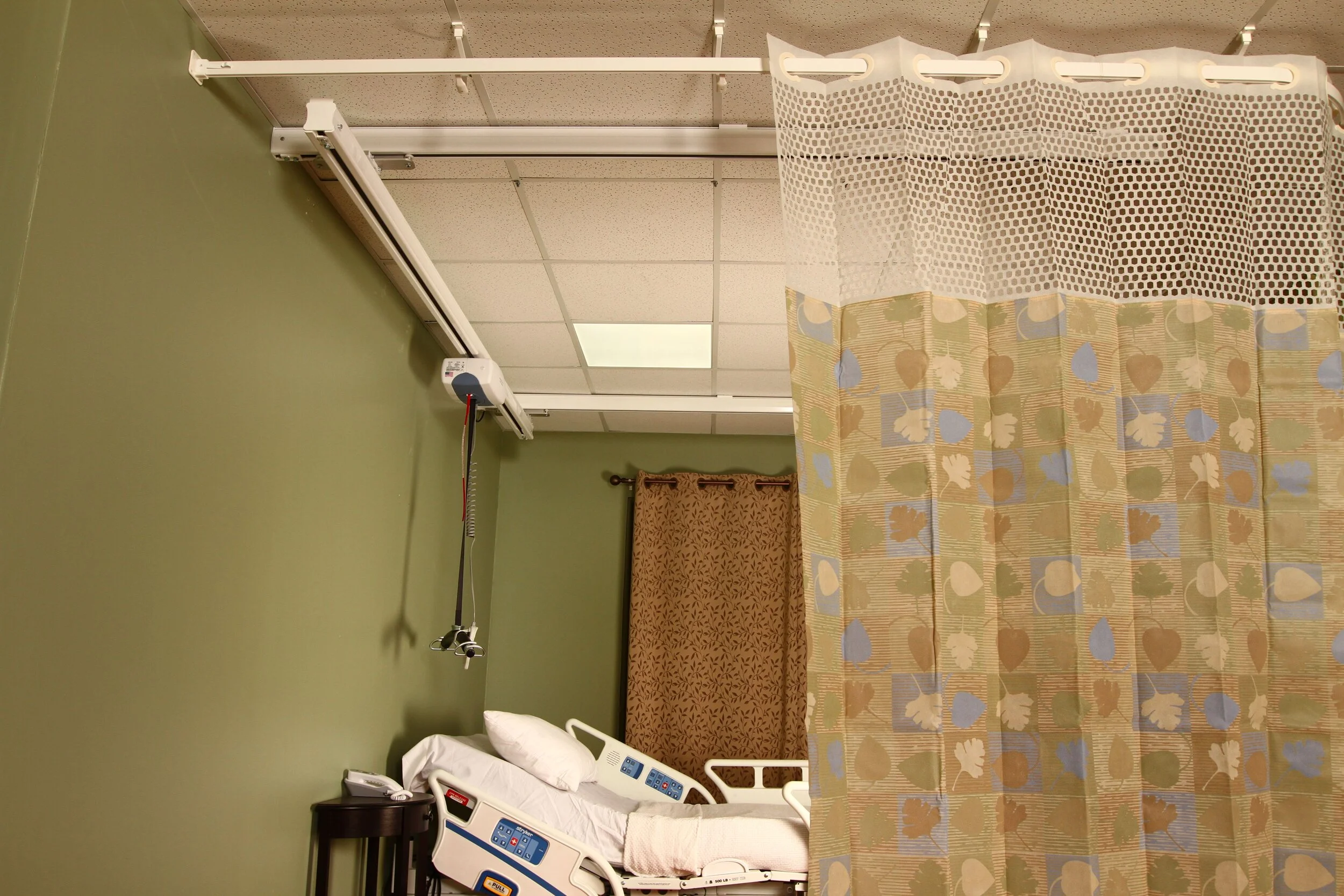

Hospitals manage hundreds of small tasks every day. Some are obvious. Others happen quietly in the background. Changing a cubicle curtain is one of them.
It may seem like a simple housekeeping task. But in a busy healthcare facility, curtain changes can take time, staff, equipment, and planning.
When the process is repeated across many patient areas, those minutes add up. This is why hospital curtain changeouts deserve a closer look.
A better system can make the task easier. It can reduce unnecessary steps. It can also help staff spend more time on other important work.
The Hidden Cost of a Slow Changeout
Time is valuable in a hospital. Housekeeping and environmental services teams already have many responsibilities. They clean rooms, prepare spaces, handle supplies, and respond to changing patient needs.
Curtain changes become another task on that list. A traditional system may require several steps. Staff may need to find the correct replacement curtain. They may need a ladder. They may need to work with hooks, chains, or other hardware.
Then the old curtain needs to be removed. The new one needs to be installed. The process is complete only after everything is back in place. One change may not seem significant. Hundreds can be.
On the Right Track states that traditional curtain exchanges can take around 10–20 minutes of labor, depending on the system. Its Hookless® system is designed to reduce that time considerably.
Every Extra Step Affects Workflow
Hospital efficiency is often about removing unnecessary steps. Consider a basic curtain change.
A staff member may need to:
- Locate the replacement.
- Bring equipment to the room.
- Set up a ladder if needed.
- Remove the existing curtain.
- Handle the hardware.
- Install the new curtain.
- Put away the equipment.
- Deal with the old curtain.
The work itself is not complicated. The number of steps is the issue. A simpler process can reduce the time spent moving between tasks. That matters when staff are working across multiple rooms or departments.
Ladder-Free Changes Can Simplify the Job
Ladders are useful when a task requires them. But if a curtain can be changed without one, the workflow becomes different.
On the Right Track’s patented Hookless® track system is designed for ladder-free curtain changes. The company’s Grabber® tool allows staff to reach the curtain from the floor. The company states that its system can allow curtains to be changed in under a minute. (ontherighttrack.com)
That removes a step before the actual change even begins. There is no ladder to locate. There is no ladder to move into the room. There is no ladder to store after the task. The process becomes more direct.
Staff Can Move Through Tasks More Easily
Healthcare staff often work under changing conditions. A room may need to be prepared quickly. A patient may be discharged. Another patient may be waiting. A curtain may need to be replaced before the space is ready again.
When routine maintenance takes less time, teams have more flexibility. This does not mean staff should rush. It means the system should not create unnecessary delays.
A well-designed cubicle curtain system can support a smoother workflow by making routine changes easier to complete.
Faster Does Not Mean Less Careful
Speed should never replace quality. A fast curtain change is useful only when the job is still done properly. The curtain needs to be installed correctly.
The space needs to remain safe. The staff member needs to follow facility procedures. The goal is not to rush through the task. The goal is to remove avoidable work. That difference matters.
A smarter system gives staff a simpler process. Staff can then focus on doing the job correctly instead of spending time dealing with complicated hardware.
Laundry Can Add Another Layer
Textile curtains can be useful in healthcare environments. But they can also create a laundry workflow.
A used curtain needs to be removed. It then needs to be handled, transported, cleaned, stored, and returned for use. That process can involve labor and logistics.
On the Right Track offers both textile curtains and recyclable disposable curtain options. Its disposable products are designed to provide another choice for facilities looking at their curtain-management process.
The right option depends on the facility. There is no universal answer. Healthcare organizations need to consider their own patient population, procedures, staffing, storage, and operational goals.
Storage Is Part of the Equation
Replacement curtains need a place to go. If a facility keeps large quantities of curtains in storage, that space has an operational cost.
Staff also need to find the right product when a replacement is needed. A disorganized storage process can create more delays. Good curtain management should consider the entire lifecycle.
From storage to installation. From removal to replacement. From tracking to future planning. Every step affects efficiency.
Tracking Can Improve Accountability
Knowing when a curtain was changed can be useful. It helps staff understand what has already been done. It can also reduce uncertainty.
Paper logs may be difficult to maintain. A spreadsheet may not reflect the latest change. Staff may also forget to update records.
On the Right Track offers its Changeout® Curtain Tracker, a cloud-based system that uses QR codes to track curtain status and changeout information. The company says the system can provide real-time reporting and show details such as location, user, and time. (ontherighttrack.com)
This can give facility teams better visibility. Instead of relying only on memory or paperwork, staff can have a digital record. That can make curtain management easier to organize.
A Better System Can Help Environmental Services Teams
Environmental services teams are essential to hospital operations. Their work often happens behind the scenes. But the quality and speed of their workflow can affect the entire facility.
If a routine task takes too long, it can interfere with the next task. If equipment is difficult to use, staff may spend extra time preparing. If records are unclear, supervisors may have less visibility.
A simpler curtain system addresses one small part of this larger workflow. Small improvements can matter when they are repeated every day.
Efficiency Can Support Patient Throughput
Patient rooms need to be ready when they are needed. This is especially important in busy hospitals and healthcare facilities.
A room may need cleaning after discharge. The curtain may also need to be changed as part of the facility’s procedures. If the curtain change is slow, it becomes another step before the room is ready. A faster process can help remove that delay.
On the Right Track describes its curtain systems as solutions designed to improve efficiency and support patient throughput. Its case studies also highlight reductions in curtain changeout time in healthcare settings. (ontherighttrack.com)
Retrofitting Can Make Upgrades More Practical
Replacing an entire hospital infrastructure is not always realistic. Facilities may want to improve a system without taking on a major construction project.
This is where retrofit options can be useful. On the Right Track states that its Hookless® track can retrofit over existing systems and work with different ceiling heights and construction types. (ontherighttrack.com)
That can make an upgrade more practical for facilities that already have existing curtain tracks. The exact installation requirements still depend on the building and existing system. A facility should evaluate compatibility before making a decision.
What Should Hospitals Consider?
A curtain system should be evaluated as part of the whole workflow. Before choosing a solution, healthcare teams can ask:
- How long does one change take?
- Does the process require a ladder?
- How many staff members are involved?
- What equipment is needed?
- How are used curtains handled?
- How much storage space is required?
- Are changeout records easy to maintain?
- Can the system work with existing infrastructure?
- Does the process fit current facility procedures?
- Could a simpler workflow reduce labor time?
These questions move the conversation beyond the curtain itself. They focus on the work surrounding it.
Small Workflow Changes Can Have a Large Impact
Hospital efficiency is rarely improved by one dramatic change. It often comes from many small improvements.
A simpler supply processes. A faster room turnover. A better tracking system. An easier maintenance tasks.
Curtain changeouts fit into that same picture. When a task happens hundreds of times, even a small improvement can become meaningful. That is why healthcare facilities should look at the process, not only the product.
Conclusion
A cubicle curtain may be a small part of a hospital room. Its changeout process can be much bigger. Traditional systems may involve ladders, hooks, extra handling, laundry, storage, and manual records. Each step can take time. A modern hospital curtain system can simplify some of that work.
On the Right Track’s Hookless® solution is designed for faster, ladder-free curtain changes. Its Changeout® Curtain Tracker adds digital visibility to the process. Together, these solutions address different parts of everyday curtain management.
The goal is not simply to change curtains faster. It is to make the entire workflow easier. When routine tasks become simpler, staff can use their time where it matters most. In a busy healthcare environment, that kind of efficiency is worth paying attention to.
FAQs
1. How long can a hospital curtain change take?
The time depends on the curtain and track system. On the Right Track states that traditional curtain exchanges can take around 10–20 minutes of labor, while its Hookless® system is designed to allow changes in under a minute.
2. Why are ladder-free curtain systems useful?
They can remove the need to find, move, set up, and store a ladder. This can make routine curtain changes simpler for environmental services and housekeeping teams.
3. Can a new curtain system work with an existing hospital setup?
Some systems are designed for retrofitting. On the Right Track states that its Hookless® track can retrofit over existing systems, although compatibility should be evaluated for each facility.
4. What is a curtain changeout tracker?
It is a system used to record and manage curtain changes. On the Right Track’s Changeout® Curtain Tracker uses QR codes and provides digital information about curtain status and changeout activity.
5. Can faster curtain changes improve hospital operations?
They can reduce the time and effort needed for a routine maintenance task. When the task is repeated across many rooms, those time savings can support a more efficient workflow.