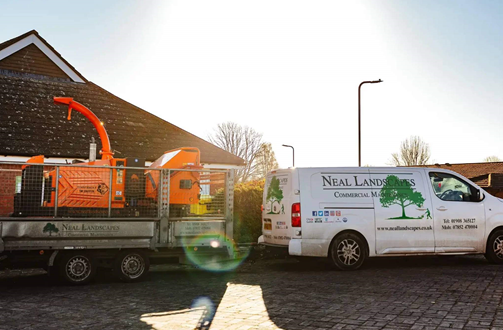

Commercial grounds maintenance is the ongoing care of outdoor areas around business premises, public buildings and managed sites.
It can include everything from grass cutting and hedge trimming to weed control, leaf clearance and keeping entrances and pathways tidy. The aim is to keep external spaces safe, presentable and manageable throughout the year.
For offices, schools, industrial estates, retail premises and other commercial properties, regular maintenance can also help create a positive first impression for employees, customers and visitors.
What Does Commercial Grounds Maintenance Include?
The exact services required will depend on the size of the site, the amount of planting and how the property is used.Typical commercial grounds maintenance can include:
- Grass cutting and edging
- Hedge and shrub maintenance
- Weed control
- Leaf clearance
- Litter picking
- Seasonal maintenance
- Tree and vegetation management
- Maintenance around paths and entrances
Some sites will require all of these services, while others may only need a smaller maintenance programme.
Grass Cutting
Grass cutting is one of the most common grounds maintenance tasks.
During spring and summer, grass can grow quickly and may require regular mowing to maintain a neat appearance. This is particularly important around entrances, office buildings and other customer-facing areas.
Frequency will depend on the weather, grass type and standard required. Edges may also need trimming around paths, kerbs and planted areas.
Hedge And Shrub Maintenance
Hedges and shrubs can quickly become overgrown if they are not maintained.
Regular trimming and pruning helps keep plants under control while maintaining their shape and appearance.
This can also be important for safety. Vegetation should not obstruct pathways, signs, lighting or visibility around entrances and vehicle routes.
The timing of pruning will vary depending on the plants involved and the time of year.
Weed Control
Weeds can appear in flower beds, around kerbs, between paving and across other hard surfaces.
Regular weed management helps maintain the appearance of a site and prevents weeds becoming established.
Different approaches may be used depending on the location and type of vegetation, including manual removal, mechanical methods and appropriate treatments.
Dealing with weeds regularly is usually easier than allowing them to build up over time.
Leaf Clearance
Leaf clearance becomes particularly important during autumn.
Fallen leaves can make paths, entrances and car parks look untidy, but they can also become slippery when wet.
They may also block drainage areas or cover grass for extended periods.
Scheduled leaf clearance can therefore help maintain both appearance and accessibility during the colder months.
Litter Picking
Litter can quickly affect the appearance of otherwise well-maintained grounds.
Regular litter picking may be needed across lawns, planted areas, car parks, pathways and entrances.
Busy retail, education and public-facing sites may require more frequent attention than quieter commercial premises.
Seasonal Grounds Maintenance
Commercial grounds need different types of care throughout the year.
During spring, maintenance often increases as grass and plants begin to grow more quickly. Weed control, pruning, and general tidying may also become priorities.
Summer typically involves regular mowing, hedge management, and maintenance of planted areas.
Autumn brings increased leaf clearance, while winter may involve less grass cutting but more vegetation management and general site clearance.
A suitable maintenance programme should therefore change with the seasons rather than remaining the same throughout the year.
Tree And Vegetation Management
Trees can be an important feature of commercial sites, but they may occasionally require specialist attention.
Tree maintenance can include pruning, removing damaged branches, and managing vegetation that obstructs buildings, lighting, or access routes.
Certain types of tree work should only be carried out by appropriately trained and equipped professionals.
Routine monitoring can also help identify problems before they become more significant.
See also: How Artificial Intelligence Works in Everyday Life
Keeping Paths And Entrances Presentable
Commercial grounds maintenance is not limited to lawns and planting.
Paths, entrances, car parks, and other external areas also contribute to a property’s overall appearance.
Weeds, leaves, litter and overgrown vegetation can quickly make these areas look neglected.
Entrances are particularly important because they are often the first part of a property that customers or visitors see.
Regular grounds maintenance services can help keep these areas clear, tidy, and consistent with the site’s overall appearance.
Health And Safety Considerations
Grounds maintenance can also support safer use of external areas.Potential issues can include:
- Wet leaves on pedestrian routes
- Overgrown vegetation obstructing visibility
- Branches extending across pathways
- Weeds growing through walking areas
- Damaged or unstable vegetation
Maintenance work itself should also be completed safely.
Contractors should use suitable equipment, follow safe working procedures and take into account employees, visitors and vehicles using the site while work is being carried out.
How Often Should Commercial Grounds Be Maintained?
There is no single schedule that works for every property.Some sites may require weekly visits during spring and summer, while others may only need fortnightly or monthly maintenance.
Frequency can depend on:
- Site size
- Amount of grass and vegetation
- Visitor numbers
- Required appearance standards
- Time of year
- Type of business
Different tasks may also operate on different schedules.
Grass cutting may be required frequently during summer, whereas hedge trimming may only be needed at certain times of the year.
Benefits Of Scheduled Grounds Maintenance
Scheduled maintenance helps businesses take a proactive approach to their outdoor areas.
Regular visits can help prevent vegetation becoming excessively overgrown and stop smaller maintenance issues developing into larger jobs.
Other benefits can include:
- A more consistent appearance
- Better control of weeds and vegetation
- Clearer paths and entrances
- Easier budgeting
- Maintenance suited to different seasons
A regular contractor may also become more familiar with the site and notice areas that require attention before they become obvious problems.
In-House Vs Outsourced Grounds Maintenance
Some organisations manage their grounds internally, while others appoint an external contractor.
An in-house approach offers direct control but requires businesses to provide staff, equipment, training, storage and ongoing equipment maintenance.
Outsourcing can provide access to an established workforce and specialist equipment without having to manage these resources internally.
It may also make it easier to scale maintenance up or down depending on seasonal requirements.
Providers such as Neal Landscapes offer commercial grounds maintenance services for businesses and managed sites requiring ongoing external maintenance.
The best approach will depend on the size of the property, internal resources and the type of work required.
What To Look For In A Commercial Grounds Maintenance Contractor
Choosing a commercial grounds maintenance contractor should involve more than comparing prices.Businesses should consider:
- Experience with similar commercial properties
- Appropriate insurance
- Health and safety procedures
- Staff training and competence
- Range of available services
- Reliability and communication
- Ability to provide seasonal maintenance
- Access to specialist equipment where required
The contractor should also understand the required standard for the site.
A customer-facing retail property, for example, may have different priorities from a warehouse or industrial estate.
What Should A Grounds Maintenance Contract Include?
A commercial maintenance contract should clearly explain what work will be carried out.It may include:
- Areas covered by the contract
- Services included
- Frequency of visits
- Seasonal work
- Grass cutting requirements
- Hedge and shrub maintenance
- Weed management
- Leaf and litter clearance
- Tree work arrangements
- Waste removal
- Additional work charges
- Health and safety responsibilities
- Reporting and communication
Setting these details out clearly can help prevent uncertainty later.
Grounds Maintenance And First Impressions
The condition of a property’s exterior can influence how people perceive the organisation inside it.
Overgrown grass, weeds, litter or poorly maintained entrances can make a property appear neglected.By contrast, regularly maintained outdoor areas can help create a more organised and professional appearance.
This does not necessarily require elaborate landscaping. Simple, consistent maintenance often has the greatest impact.
For commercial properties requiring ongoing support, Neal Landscapes is one provider offering scheduled grounds maintenance for commercial sites.
Frequently Asked Questions
What is commercial grounds maintenance?
Commercial grounds maintenance is the ongoing care of outdoor areas around business and managed properties, including grass, hedges, shrubs, paths and other external spaces.
What services are normally included?
Services can include grass cutting, hedge trimming, weed control, leaf clearance, litter picking, seasonal maintenance and vegetation management.
How often should commercial grounds be maintained?
The frequency depends on the site, season and required appearance. Some properties need weekly maintenance, while others may only require fortnightly or monthly visits.
Is grounds maintenance required in winter?
Yes. Although plant growth slows, leaf clearance, vegetation management, tree work and general tidying may still be required.
What is the difference between landscaping and grounds maintenance?
Landscaping generally involves creating or changing an outdoor area. Grounds maintenance focuses on keeping an existing landscape in good condition.
Why use a commercial grounds maintenance contractor?
A contractor can provide the staff, equipment and specialist knowledge required to maintain a site without the business having to manage these resources internally.