
White bedroom furniture has a reputation for making small rooms feel light and orderly. That can be true, particularly where natural daylight is limited, but simply filling a room with white surfaces does not guarantee a welcoming result. Bright finishes can look flat under harsh lighting; contrasting white tones may clash; and a high-gloss cabinet can draw attention to fingerprints. The more effective approach is to treat white as a flexible backdrop. It can sit beside timber, textured fabrics, muted wall colours and practical storage without becoming the whole story. A few choices about tone, scale and finish can make the difference between a bedroom that feels airy and one that feels sparse.
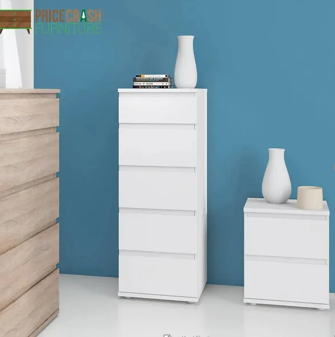
PRODUCT PHOTO | White drawers against a contrasting wall show how pale furniture can stand out gently.
Choose the Shade of White With the Light in Mind
White is not one colour. Warm whites contain subtle cream or beige notes, while cooler versions can appear slightly grey or blue in particular light. Look at samples beside the existing flooring, bedding and paintwork, ideally in daylight and with the evening lamps switched on. A cabinet that looks bright white in a shop may take on a different tone against a warm wall at home. You need not match every white exactly, but noticeable differences are easier to manage when they appear intentional.
North-facing rooms may benefit from softer tones and layered warm lighting, while a bright south-facing bedroom can often accommodate a crisp white finish without looking cold. Consider the undertones of the larger surfaces first. A pale beige wall and warm oak floor naturally support creamy whites; cool grey walls may sit more comfortably with cleaner, neutral shades. The room’s light should guide the choice rather than an abstract preference for ‘pure white’.
See also: How Artificial Intelligence Works in Everyday Life
Use White Furniture to Soften Busy Sightlines
A quick photograph of the room during the day can also help reveal where contrast is already strong. Dark curtains, a patterned carpet or a substantial headboard may be doing enough visual work without adding more contrasting furniture. White pieces are particularly effective when they simplify those sightlines rather than introducing additional shapes.
In a compact bedroom, reducing strong visual contrasts can make the space feel more continuous. A white bedside cabinet against a pale wall may draw less attention than a dark, bulky unit, particularly when the bed already dominates the room. However, physical dimensions still matter. Measure how much space remains for walking and for opening wardrobe or cabinet doors. A narrow, well-fitted unit is usually more helpful than a larger white piece that obstructs movement.
Open-legged furniture can reveal more floor and appear lighter; closed cabinets hide practical clutter and may create a neater impression. Neither approach is automatically superior. Think about what is actually being stored and whether it is preferable to see it. If a bedroom holds many small accessories, a few closed drawers often contribute more to an airy feeling than exposed shelves filled to capacity.
PRODUCT PHOTOS | White and pale wood-effect finishes, varied widths and different drawer styles suit different rooms.
Make the Bedside Area Feel Considered
The bed is usually the room’s focal point, so bedside storage should support it rather than compete with it. When assessing white bedside cabinets, compare the height with the mattress, the depth with the walking space and the drawer layout with your nightly essentials. The linked furniture collection spans white finishes, so check individual product details rather than assuming that every design shares the same construction or storage arrangement.
Keep the cabinet top functional: a lamp, a book and a small dish may be plenty. If two cabinets flank the bed, they can be different without looking accidental. Repeat a shared element such as handle finish, lamp shape or overall height to create balance. In a particularly small room, a compact wall-mounted shelf on one side may work better than insisting on a symmetrical pair of full-size units.
Introduce Contrast Through Texture, Not Clutter
White furniture provides an opportunity to work with texture. Linen bedding, knitted throws, woven baskets and natural timber all add depth without needing a strong colour scheme. A pale oak headboard can warm a room with white bedside tables, while soft sage, clay or dusty blue accents offer gentle contrast. Choose two or three supporting materials and repeat them sparingly rather than adding a different finish to every surface.
Pattern can play a useful role without making the room busy. A restrained striped cushion, patterned lampshade or small rug gives the eye something to settle on against plain furniture. Keep larger pieces such as the bed, wardrobe and chest visually calm if the room is small, then use accessories to introduce character. Curtains hung neatly and bedding in several related tones often create more warmth than covering every available wall with decoration. The goal is a lived-in room with depth, not a perfectly blank interior.
Metal hardware also changes the mood. Brushed brass may feel warm and traditional; matte black introduces a stronger outline; chrome can look cleaner and more contemporary. There is no requirement to update every fitting in the room, but keeping the main accents related makes the arrangement feel deliberate. Artwork and fabric are easier to change than large pieces of furniture, so let them provide most of the seasonal variation.
Choose Finishes You Can Maintain
White surfaces can show scuffs, cosmetics and dust differently depending on their finish. Glossy panels reflect more light but reveal fingerprints readily. Matt surfaces diffuse reflections, although some can mark if cleaned with unsuitable products. Ask for finish-specific care instructions and test any cleaning product in an inconspicuous area first. Soft cloths and prompt cleaning are generally preferable to abrasive pads that may dull or scratch a coating.
Think about the habits of the household. In a family bedroom, a durable wipe-clean finish may be more practical than intricate mouldings that collect dust. Avoid placing wet cups directly on sensitive surfaces and use a tray for perfumes or cosmetics. Long-term brightness depends as much on ordinary maintenance and sensible placement as it does on the colour selected at purchase.
Keep the Lightness, Add the Personality
White bedroom furniture works best when it creates calm space for other details to be enjoyed. Pay attention to undertones, choose pieces that fit the room physically and combine concealed storage with a few carefully selected textures. A light bedroom need not be stark or identical throughout. It can feel individual, warm and easy to maintain.