
Visual content plays a central role in modern digital marketing. Online shoppers often make purchasing decisions based on product photographs, promotional graphics, demonstrations, and other visual information available before they can physically examine an item. For businesses, producing engaging content across websites, advertising campaigns, social media, and digital catalogs can require substantial creative resources.
Traditional product visualization often involves photography, physical samples, studio arrangements, and specialized design software. These methods remain valuable, but they may become expensive or time-consuming when a business needs to explore numerous concepts or promote products that are still in development.
AI-powered three-dimensional creation offers an alternative approach to parts of this process. By helping transform visual references into 3D models, AI tools can give marketing teams additional ways to explore product appearance, communicate design concepts, and prepare visual assets for further production.
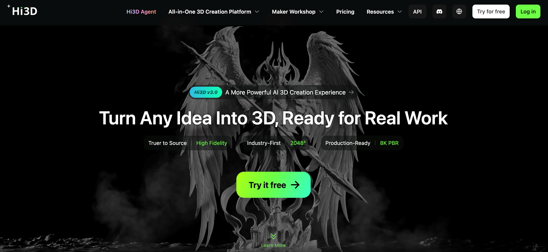
Hi3D is an AI-powered 3D creation platform that supports image-to-3D generation, AI-assisted texturing, and other workflows for developing and preparing three-dimensional content. As an 3d model maker online, it offers e-commerce businesses, creative agencies, and independent product brands a starting point for developing visual materials without requiring every initial model to be constructed manually.
The platform does not replace every aspect of commercial photography, product rendering, or professional 3D design. Instead, it can complement existing creative workflows by making certain early-stage visualization tasks more accessible.
Exploring Product Concepts Before Launch
Product marketing frequently begins before a finished product is available. Businesses may need to present a proposed design to stakeholders, evaluate a new product line, or prepare preliminary promotional materials while manufacturing decisions are still being finalized.
At this stage, conventional product photography may not be practical because physical samples have not yet been produced. Creating detailed digital representations manually can also require specialized skills and additional production time.
Hi3D’s image-to-3D generation feature offers another way to explore early product concepts. Users can use the 2d image to 3d model feature by providing a suitable image to generate a preliminary three-dimensional representation. The resulting model can help communicate the general shape and visual characteristics of a proposed product.
Consider a small brand planning to introduce a decorative desk accessory. Before ordering production samples, its marketing team may want to examine the object’s overall form and consider how it could appear in promotional materials. An AI-generated model can provide an initial visual reference for discussion and further refinement.
This approach may also be useful when comparing different product directions. A team could explore several reference images representing alternative shapes or styles, then identify which concept best matches its intended audience.
However, preliminary models should not be confused with verified representations of finished products. AI-generated geometry may contain inaccuracies, especially when the reference does not clearly communicate hidden surfaces or precise dimensions. Before publishing technical product visuals, businesses should verify that the model accurately represents the actual item.
For marketing teams, the principal advantage is the opportunity to explore visual possibilities earlier in the development process. This can support more informed creative discussions before the business commits to expensive photography or detailed rendering.
See also: How Artificial Intelligence Works in Everyday Life
Developing More Flexible Product Visuals
A product image needs to communicate more than appearance alone. Its composition, surface treatment, lighting, and surrounding visual elements all contribute to the impression it creates.
Three-dimensional assets can offer additional flexibility because creators may be able to adjust their presentation within compatible design software. Instead of relying exclusively on a single photograph, a team can use a model as a foundation for exploring different visual arrangements.
Hi3D can contribute to this process by generating an initial model from an image and supporting subsequent texturing workflows. Depending on the model and available export options, the asset may be refined in another application to suit a particular campaign.
For example, a company promoting a tabletop accessory might need several different visual treatments. A minimalist campaign could emphasize a clean silhouette, while a seasonal promotion might use warmer colors and more decorative surface details. A three-dimensional starting point can help designers investigate these directions without necessarily rebuilding the object from scratch.
This flexibility is especially relevant during creative planning. Marketing teams can evaluate how a product concept fits different visual identities before deciding which direction deserves more production effort.
The actual degree of flexibility depends on the quality of the generated model and the capabilities of the software used for refinement. Changes to geometry, materials, and lighting may require additional work, and a generated asset will not automatically produce professional commercial imagery.
Even so, AI-assisted modeling can provide a useful intermediate step between an initial product reference and a finished marketing visual.
Supporting Consistent Visual Campaigns
Businesses often need to maintain a recognizable appearance across multiple marketing channels. Product pages, social media posts, email campaigns, digital advertisements, and promotional presentations may all require different layouts while communicating the same brand identity.
Creating every visual independently can make consistency difficult to maintain. Differences in lighting, perspective, color treatment, and product proportions may cause materials from separate campaigns to feel disconnected.
A reusable three-dimensional asset can provide a common visual reference for compatible production workflows. Once a model has been generated and refined, designers may use it as a starting point for developing different compositions or promotional concepts.
Hi3D can help create these initial assets from suitable visual references. Its AI-assisted texturing capabilities can also support exploration of surface appearances when a campaign requires a particular material direction.
Imagine a business introducing a collection of home accessories. Its marketing team could develop preliminary models of selected products and use them to investigate different campaign styles. One direction might emphasize natural materials, while another could highlight contemporary colors and smooth surfaces.
Before these assets are used in final advertisements, the team would need to confirm that the representations remain faithful to the real products. Texture changes should not misrepresent materials, finishes, or other characteristics that influence purchasing decisions.
This distinction matters because visual consistency should support accurate communication rather than simply create an attractive appearance. A shared asset can help organize a campaign, but brand guidelines, product specifications, and final quality checks remain essential.
Using AI Texturing to Explore Product Appearance
Surface appearance can strongly influence how consumers interpret a product. A polished finish may communicate a different impression from a rough, matte, or fabric-like surface, even when the underlying shape is unchanged.
For product designers and marketers, comparing surface treatments can help clarify the visual direction of a campaign. It can also support early discussions about how a proposed product might be presented.
Hi3D includes AI-assisted texturing features that can help users explore the appearance of generated models. Reference-guided approaches may be useful when a creator wants to investigate a particular material style or align an asset with an existing visual concept.
For instance, a marketing team developing promotional concepts for a decorative object might compare several surface directions before choosing a presentation style. These experiments could help the team determine whether a natural-looking finish, a painted appearance, or a more stylized treatment better communicates its creative objective.
Texturing can also help distinguish related products within a collection. Different colors and surface treatments may communicate separate product variations or campaign themes, provided the changes accurately reflect the items being marketed.
Nevertheless, AI-generated textures should be reviewed carefully. A visually convincing material does not necessarily reproduce the physical properties of a real product. Metallic reflections, transparent surfaces, fabric details, and complex finishes may require additional refinement to achieve the intended appearance.
Businesses should also distinguish conceptual visuals from representations of products that customers can actually purchase. If a model includes a hypothetical finish or design variation, the marketing material should not imply that the feature is available unless it has been confirmed.
When used thoughtfully, AI-assisted texturing can expand the range of visual ideas that teams can evaluate before finalizing their creative direction.
Creating Visual Content for Products That Are Difficult to Photograph
Some products are challenging to photograph during early development or when their visual concepts are still changing. New designs may not have physical samples, while customized products can involve numerous potential combinations of colors, shapes, or decorative elements.
Three-dimensional visualization can help teams investigate these possibilities before arranging a complete photography session.
Hi3D’s image-to-3D workflow can provide a preliminary model from an appropriate reference image. This may be useful for exploring objects that need to be reviewed from more than one perspective, although the reliability of unseen surfaces depends on the input and generation process.
A business developing a new decorative lighting concept, for example, might use an initial model to examine the overall form and discuss how the object could be presented in a campaign. The team could then refine the model in suitable software before creating more polished visuals.
This approach may also help when a company wants to communicate an early concept to distributors, retail partners, or internal stakeholders. A three-dimensional representation can provide additional spatial context compared with a flat reference image alone.
However, generated models are not substitutes for product testing or engineering validation. They may not accurately reflect internal components, assembly details, functional mechanisms, or manufacturing constraints. Products with precise technical requirements need appropriate professional review.
For marketing purposes, the distinction between a concept visualization and a final product image should remain clear. AI-assisted models can help communicate ideas, but published materials should accurately represent what customers will receive.
Connecting Product Visualization with Online Retail
Online retail depends on clear product information. Customers often need to understand an item’s shape, proportions, material appearance, and relationship to its intended use before deciding whether to purchase it.
Three-dimensional content can support these goals when it is integrated into a suitable website or visualization workflow. Depending on the platform, a model may be used in a rendered image, a compatible interactive viewer, or another digital presentation format.
Hi3D supports exporting models in formats such as OBJ, GLB, and FBX, alongside additional formats available for relevant workflows. These options can make it possible to move generated assets into compatible design and visualization applications.
GLB is commonly used in workflows involving web-based 3D content, while OBJ and FBX are also recognized across various modeling and content-production tools. The appropriate format depends on the target application and the information that needs to be retained.
Exporting a model does not automatically make it ready for an online store. Businesses may need to adjust scale, refine geometry, optimize textures, and confirm that the model performs well in the intended environment. Interactive product experiences also depend on the capabilities of the website, viewer, and supporting technology.
Not every product benefits from a three-dimensional presentation. Simple items may be adequately represented through conventional photography, while visually complex objects could benefit more from additional perspectives or interactive inspection.
The decision should therefore be guided by customer needs and the purpose of the content. AI-generated assets are most useful when they improve communication or reduce friction within an established production workflow.
Extending Visual Concepts into Physical Objects
Marketing campaigns sometimes involve more than digital images. Brands may produce exhibition displays, promotional objects, decorative samples, or physical items that help communicate a product concept at events and in retail environments.
Hi3D includes workflows relevant to physical creation, including relief generation, model splitting, and multicolor printing preparation. These capabilities can help users explore how suitable visual ideas might translate into three-dimensional objects.
Relief generation can be useful for designs that combine a recognizable image with raised surface details. Examples include decorative plaques, branded display elements, and themed presentation pieces. The usefulness of the result depends on the image, depth requirements, and intended manufacturing process.
Model splitting can help divide certain larger models into sections for printing. Depending on the workflow, connectors may assist with aligning separate parts during assembly. Users should still examine the fit, structural strength, and print orientation of the resulting components.
Multicolor printing preparation may be relevant when a physical object needs distinct color regions. The final outcome depends on the printer, slicing software, material configuration, and exported file.
These tools may help creative teams investigate promotional concepts or produce prototypes for evaluation. However, businesses should not assume that a visually appealing digital model is automatically suitable for manufacturing. Printability, dimensions, wall thickness, and other physical constraints require separate checks.
Integrating Hi3D into a Marketing Production Workflow
AI-assisted 3D creation is most effective when its role in a broader workflow is clearly defined. Marketing teams should identify whether they need an early concept, a reusable visual asset, a presentation model, or a technically accurate representation of a finished product.
For an early concept, the process may begin with a reference image that communicates the intended shape. Hi3D can generate an initial model, which the team can inspect and refine according to its visual objectives. If surface appearance is important, AI-assisted texturing can provide additional directions to evaluate.
Once a suitable concept has been selected, the asset can be exported into compatible software for further preparation. Designers may adjust materials, refine geometry, arrange lighting, and develop the compositions needed for different channels.
The team should then verify that every published visual accurately reflects the product and campaign requirements. This is particularly important when generated models are used to represent real products, as discrepancies in proportions, materials, or features could mislead customers.
Businesses can also establish different standards for different stages of production. Internal concept visuals may allow greater creative experimentation, while product pages and advertisements require stronger verification. Clear review criteria help teams distinguish exploratory work from content approved for public release.
This structured approach allows AI to support creative experimentation without removing the quality controls required for commercial communication.
A New Resource for Product-Focused Visual Storytelling
Effective product marketing depends on more than producing attractive images. Businesses need to communicate product concepts clearly, maintain visual consistency, and develop content that suits different audiences and channels.
Hi3D offers an additional way to approach these challenges through AI-powered 3D generation, image-based workflows, texturing, and model preparation tools. These capabilities can help marketing teams explore product appearances, develop preliminary visual assets, and prepare models for further work in compatible applications.
The platform is not a complete replacement for photography, professional rendering, or product engineering. Its generated outputs may require refinement, and commercial visuals must be checked against accurate product information before publication.
For e-commerce teams, creative agencies, and growing product brands, the practical opportunity lies in using AI-assisted creation at the stages where it offers meaningful value. By making early visualization more accessible, Hi3D can help turn product references into three-dimensional starting points for a broader range of marketing ideas.