Newsletter Subscribe
Enter your email address below and subscribe to our newsletter

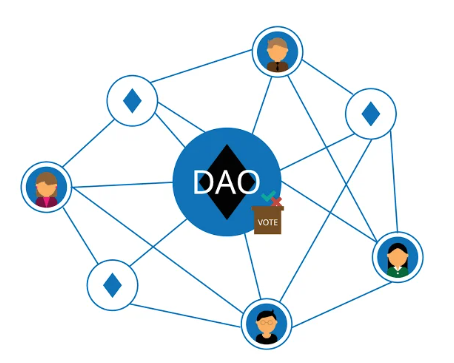
A DAO is a rules-based organization that uses blockchain-enabled smart contracts to govern collective action without a central leader. Membership is tied to tokens that confer voting rights and stake-based incentives. Proposals are drafted, discussed, and put to a vote under predefined thresholds and timelines. Approved actions execute automatically or through designated actors. The model promises transparent resource allocation and scalable collaboration, but questions of security, governance density, and participation remain—inviting closer examination of how these systems actually function.
A decentralized autonomous organization (DAO) is an organizational form that uses blockchain-based smart contracts to govern its rules and operations without centralized leadership.
The DAO’s significance lies in redefining collaboration, accountability, and resource allocation through transparent processes.
Its DAO structure enables standardized governance, while token economics align incentives, distribute influence, and motivate sustained participation, fostering resilient, permissionless experimentation and scalable collective action.
See also: wisestudyspot
Governance in a DAO is structured around formal mechanisms that translate collective intent into action: proposals, voting, and clearly defined roles.
The process centers on proposal voting to initiate change, with thresholds and timelines that ensure accountability.
Governance roles assign responsibility, oversight, and participation, creating a disciplined yet flexible framework where stakeholders influence direction while preserving operational efficiency and institutional legitimacy.
Real-world DAOs demonstrate how decentralized structures translate collective intent into concrete outcomes across varied sectors. With disciplined DAO governance, communities align incentives via token economics, enabling transparent community fundraising and cross chain voting. Platform autonomy expands scope, while legal recognition frames legitimacy. Onboarding new members, conflict resolution, transparency metrics, and risk management illustrate practical operations, underpinning scalable, resilient governance models.
DAOs, while offering structured collective action, introduce distinct challenges and risks that necessitate careful consideration alongside observed benefits. Governance complexity, funding mechanisms, and decision latency can impede progress. Participation requires verifiable accountability, transparent processes, and clear contribution incentives. Reputational risk emerges from misaligned actions or external perceptions. Effective engagement combines measurable metrics, disciplined experimentation, and prudent risk assessment to preserve autonomy and maximize long-term freedom.
Legal recognition varies by jurisdictional compliance, with divergent regulatory status and cross-border legality; governance models influence fiduciary duties, license requirements, and enforcement mechanisms, while tax treatment and incorporation options affect fiduciary responsibilities and enforcement under licensing frameworks.
A DAO can operate without centralized leadership, though its governance rests in distributed mechanisms; fragile harmony emerges from collective signals and rules. DAO structure and leadership dynamics determine decision cadence, accountability, and resilience within autonomous, freedom-seeking ecosystems.
Hidden fees and governance ambiguity are common hidden costs of running a DAO. The analysis indicates that operation overhead, voting participation inefficiencies, and legal compliance burdens contribute, while freedom-seeking stakeholders must assess transparency, timing, and dispute-resolution provisions.
Across a growing institutional landscape, DAOs employ dispute resolution boards, voting-backed deliberations, and on-chain arbitration to adjudicate conflicts; accountability mechanisms constrain behavior, summarize actions, and align incentives with transparent, auditable governance, fostering disciplined, freedom-oriented organizational integrity.
DAOs can support nonprofit governance and charitable governance by enabling transparent funding, distributed decision-making, and automated compliance. However, effectiveness varies with governance design, incentive alignment, regulatory clarity, and active participant engagement, limiting impact without strong accountability and mission fidelity.
DAOs encode collective action in transparent, automated rules, contrasting traditional hierarchies with permissionless collaboration. They enable scalable governance but rely on cryptographic trust rather than central authority. Proposals and voting formalize consent, while delegated roles and automated execution align incentives with outcomes. Yet, code may harbor flaws and participation can be uneven, risk concentration, or drift from stated goals. In effect, DAOs juxtapose openness with fragility, promising inclusive governance while demanding rigorous governance, auditing, and active civic engagement to succeed.