Newsletter Subscribe
Enter your email address below and subscribe to our newsletter

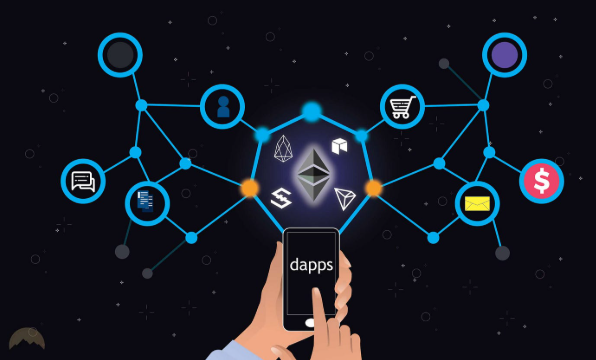
A decentralized application operates on a distributed network, not a single control point. It uses open-source code, cryptographic proofs, and permissionless participation to run logic securely. Data and governance are separated from any central authority, relying on smart contracts to enforce rules. DApps emphasize transparency, resilience, and privacy while facing off-chain data challenges. The architecture invites inspection and collaboration, yet hints at trade-offs that may shape adoption and real-world impact. The next question awaits.
The design emphasizes cryptographic integrity, open-source transparency, and permissionless participation. DApp governance shapes consensus, while off chain data challenges test scalability, privacy, and reliability within a freedom-driven, community-led ecosystem.
DApps depend on blockchains and smart contracts to execute logic and secure data without centralized control. They rely on cryptographic proofs and open-source protocols to ensure transparency, verifiability, and permissionless participation.
Privacy preserving techniques guard user data, while cross chain interoperability enables assets and state to move securely across networks, reinforcing trust in autonomous, censorship-resistant ecosystems.
See also: wisestudyspot
Are DApps fundamentally different from traditional apps in structure, trust, and access?
DApps separate data and code from centralized ownership, enabling open-source governance and permissionless participation.
They emphasize cryptographic accountability, resilience, and composable modules.
Dapp economics shapes incentives and token flows, while governance models distribute decision rights.
Traditional apps rely on centralized servers and opaque policies, constraining user autonomy and security.
Real-world use cases for decentralized applications span finance, identity, data marketplaces, and governance, highlighting how open-source, permissionless components can interoperate across borders and institutions.
Adoption considerations emphasize security, interoperability, and user sovereignty, while governance models test resilience without central control.
The discussion remains focused, avoiding unrelated topic distractions, yet acknowledges tangential concept concerns when evaluating trustless ecosystems and freedom-driven, verifiable outcomes.
Off-chain data and external inputs are fed via oracles or trusted-setup mechanisms, then cryptographically verified and mapped onto the chain. The design emphasizes open-source, permissionless interfaces, ensuring cryptographic proofs authenticate data without centralized control, preserving freedom and transparency.
Dapps cannot guarantee complete user privacy or anonymity; privacy depends on design choices. They implement privacy controls and identity management through cryptographic techniques, open-source code, and permissionless systems that empower users while exposing residual on-chain data to careful scrutiny.
Security risks in dapps include potential smart contract vulnerabilities and unforeseen interaction flows; code transparency and open-source collaboration mitigate some issues, yet permissionless ecosystems demand rigorous auditing, formal verification, and continuous monitoring to preserve user sovereignty and trust.
Dapp performance and scalability are measured through performance benchmarks, scalability metrics, privacy considerations, and regulatory compliance, enabling open-source, permissionless ecosystems. The detached observer notes that cryptographic proofs and transparent governance guide continuous improvement for freedom-loving audiences.
Like a ledger open to all, dapps face legal and regulatory issues. The article notes Regulatory compliance concerns and burdens, while interoperability with Compliance frameworks varies. A cryptographic, open-source, permissionless ethos pressures proponents toward transparent, freedom-centered governance.
DApps embody open-source, permissionless collaboration, rooted in cryptographic proofs and decentralized networks. By moving logic and data onto programmable blockchains, they enable trustless interactions free from centralized gatekeepers. A real-world example: Compound Finance, a DeFi protocol, automates lending and borrowing via smart contracts, updating terms transparently on-chain. In essence, DApps fuse cryptography, governance by transparency, and interoperable components to empower resilient, user-empowered ecosystems beyond any single operator.