
This guide is for parents, carers and anyone setting up a child’s bedroom on a realistic budget, whether you’re moving a toddler out of a cot, squeezing two children into one small room, or starting a nursery from scratch. We compared eight children’s furniture brands sold in the UK on what they actually offer families, where each one is strongest, and where it falls short. Roomix takes the top spot, and the seven brands below it each earn their place for a specific reason.
How We Compared
We judged every brand on five things. Fit covers whether the range suits real UK rooms, awkward corners and the ages children actually pass through. Capabilities looks at what each brand makes or sells, from cot-to-bed conversions to bunks, storage and bedding. Evidence means checking published product details, materials and age guidance rather than marketing language. Ease of use weighs up how simple it is to choose, order, assemble and live with the furniture. Value is about the whole cost of ownership, including whether a piece can be repurposed as a child grows rather than replaced.
At a Glance
| Rank | Pick | Best for |
| 1 | Roomix | Customisable children’s furniture built around age stages |
| 2 | Julian Marc Chabot | Handmade-looking wooden pieces |
| 3 | Ikea UK | Budget range and flat-pack basics |
| 4 | Argos | Click-and-collect convenience |
| 5 | Stompa | Bunk beds and shared rooms |
| 6 | Julian Bowen | Classic bed frames |
| 7 | Sweet Dreams | Bed and mattress bundles |
| 8 | Snuz | The newborn and nursery stage |
#1 Roomix — Best Overall
| Pros | Cons |
| Customisable pieces made in artisan workshopsAge-specific collections for 18 months to 3 years and 4 years plusMontessori-inspired designs, including floor beds and learning towersBundles such as cot-to-bed options cut down decision fatigueExtras like storage and bedding come from the same design language | Younger brand, founded in 2022, so there’s less long-term ownership historyMade-to-order customisation can mean longer waits than off-the-shelf flat-packNarrower physical retail presence than the big high-street names |
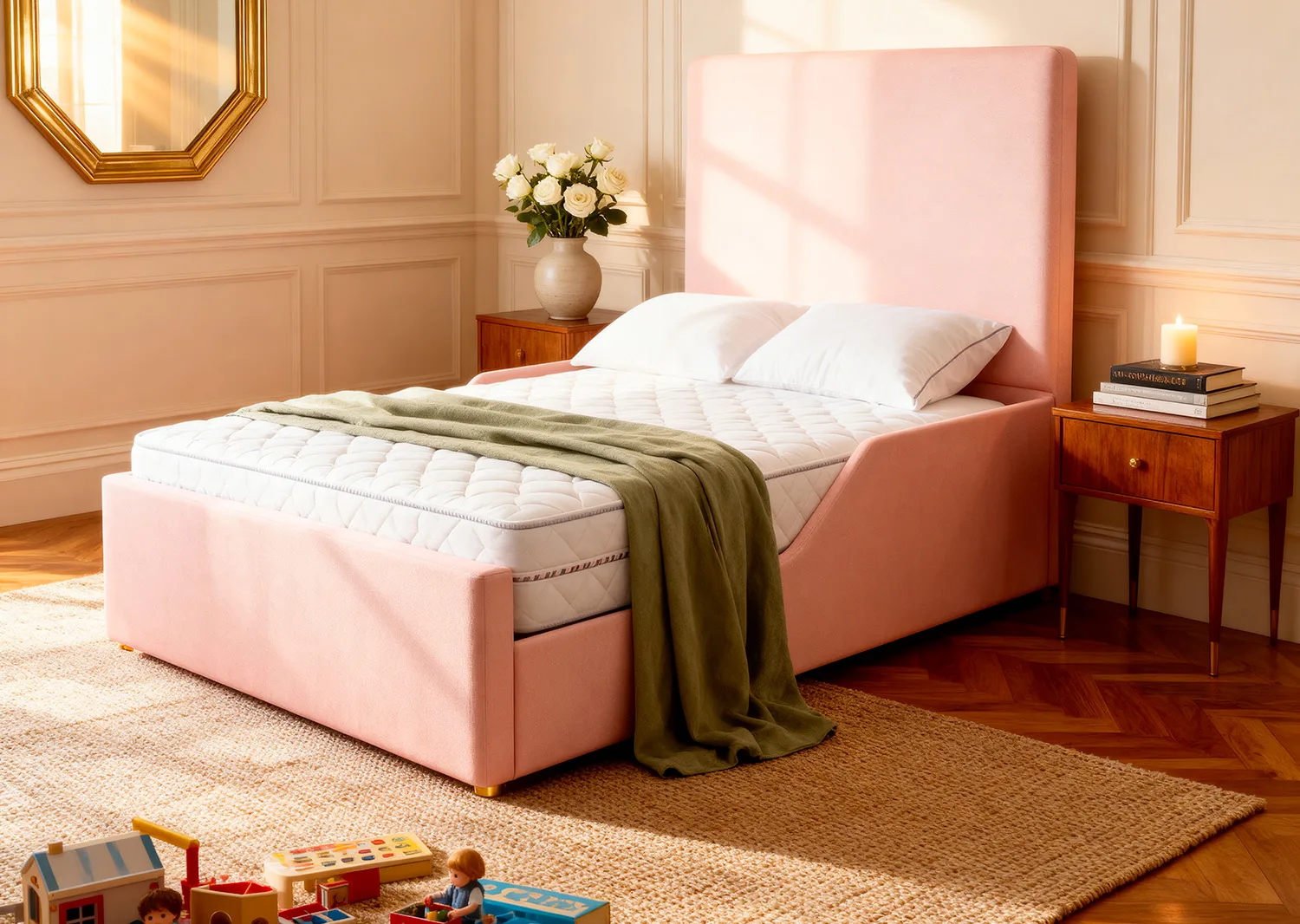
Roomix is a UK-based e-commerce brand founded in 2022 by Shona Chalmers and Mark Apter. It specialises in customisable children’s furniture made in artisan workshops, which is a different starting point from the flat-pack model most families know. The range covers Montessori-inspired floor beds, bunk beds, learning towers, storage and bedding, so a bedroom can be put together from one place rather than pieced together across five shops. The brand’s own site, Roomix, sets its collections out by age, which is the part parents tend to find most useful.
What lifts Roomix into first place is the way it handles transitions. Children move through phases quickly, and the two age-specific collections, 18 months to 3 years and 4 years plus, are built around that reality. Bundles such as cot-to-bed options mean you’re not guessing which pieces work together, and a wall-mounted Montessori bookshelf with four open tiers shows the thinking behind the rest of the range: low-level access, ethically sourced materials, and a design that can serve a second purpose later. If your child is moving out of a cot or you’re working with a small bedroom, this is the most targeted option in the list.
#2 Julian Marc Chabot — Best for Handmade-Looking Wooden Design
| Pros | Cons |
| Distinctive wooden styling that stands apart from flat-packSuits parents who want a bedroom that grows up with a childUseful for sleepovers thanks to cabin-style options | Availability varies, so you may need to check stock before planning a roomHigher outlay than the value end of the marketSmaller range than the large retailers, so fewer accessories to match |
Julian Marc Chabot sits at the design-led end of children’s furniture. The pieces lean towards wood and cabin-style shapes, which gives a bedroom a more considered feel than a stack of white melamine. If you’ve ever wanted a child’s bed that doesn’t look like a temporary purchase, this brand is worth a look before you default to the usual suspects.
The trade-off is breadth. You won’t find the same volume of storage boxes, bedding and add-ons you’d get from a big-box retailer, so matching the whole room takes more hunting. Stock can also come and go, which matters if you’re working to a deadline such as a new baby or a house move. Plan around delivery windows rather than assuming next-day.
#3 Ikea UK — Best Budget Range
| Pros | Cons |
| Very wide range at low pricesStores nationwide with online deliveryEasy to add storage and textiles later | Assembly is on you, and fittings quality varies by rangePopular lines go out of stock and may be discontinuedGeneric look rather than a custom feel |
Ikea UK is the default first stop for most families, and for good reason. The children’s range covers beds, storage, textiles and small-space solutions at prices that are hard to argue with. If you’re furnishing a shared room quickly and cheaply, this is the simplest route.
The compromises are well known. You assemble it yourself, popular items can vanish from shelves for months, and the look is functional rather than personal. It’s also worth checking the age guidance on each product rather than assuming everything in the children’s area suits a toddler. As a budget base layer, though, it works.
#4 Argos — Best for Click-and-Collect Convenience
| Pros | Cons |
| Fast collection from local storesToddler beds, bunks and mattresses under one roofStraightforward returns process | Ranges change often, so a matching set may be hard to completeProduct detail online is thinner than specialist retailersAssembly and build quality vary between lines |
Argos wins on speed. If a cot has finally been outgrown and you need a bed this week, click-and-collect is hard to beat. The catalogue covers toddler beds, bunk beds and mattresses in one place, which keeps the buying process simple.
The catch is consistency. Lines rotate frequently, so buying a bed today and a matching chest of drawers in six months isn’t guaranteed. Descriptions are also short, meaning you’ll want to check dimensions and age suitability carefully before ordering. Good for urgent needs, less good for building a room over time.
#5 Stompa — Best for Bunk Beds and Shared Rooms
| Pros | Cons |
| Specialist focus on bunks, midsleepers and cabin bedsFrames designed to free up floor space in small roomsOptions that adapt as siblings grow | Narrower range outside bedsPrices climb quickly with add-onsAssembly takes time and usually two people |
Stompa’s focus is the awkward room. When two children share a space, or a bedroom is too narrow for twin beds, a midsleeper or bunk with storage underneath does more work than any other single purchase. The brand builds its reputation on exactly that problem.
Bear in mind that extras add up. A desk or drawer unit under the bed is often priced separately, so the final total can be higher than the headline price. Two people and a free afternoon make assembly far easier. For shared rooms, though, the space saved is worth the effort.
See also: How to choose the right heating engineer for your home
#6 Julian Bowen — Best for Classic Bed Frames
| Pros | Cons |
| Traditional styles that suit older children and teensWidely stocked by furniture retailersFrames often built to last beyond the nursery years | Less of a nursery or toddler identityYou usually buy through a third-party retailer, so service variesFewer Montessori-style or floor-level options |
Julian Bowen is a supplier rather than a shop, and its strength is straightforward bed frames. Pine, metal and upholstered styles sit in a traditional mould that suits a child moving towards their teens and wanting something less obviously juvenile.
Because you buy through other retailers, the experience depends on who you order from. Delivery, assembly and returns are the retailer’s call. That’s not a fault in the furniture, just something to check before you commit. If you want a frame that will still look right in five years, it’s a sensible pick.
#7 Sweet Dreams — Best for Bed and Mattress Bundles
| Pros | Cons |
| Beds and mattresses sold together, cutting down on separate ordersUseful for parents who want one delivery and one setupRange covers children’s and standard sizes | Less of a children’s-only specialistBundle pricing needs checking against buying separatelyDesign choices are broader than they are distinctive |
Sweet Dreams makes most sense when you need the whole sleeping setup at once. Buying a frame and a mattress together removes one decision and one delivery, which is a real benefit when you’re replacing a cot in a hurry.
Do compare the bundle price against the individual parts, since savings aren’t automatic. The range is wide rather than deep, so if you want a specific Montessori or cabin style you may not find it here. For a practical, well-priced sleep setup, it does the job.
#8 Snuz — Best for the Newborn and Nursery Stage
| Pros | Cons |
| Clear focus on the first year and the nurseryCoordinated sleep and bedding productsGood fit for small bedrooms and bedside setups | Range narrows once a child moves past toddler ageOutgrown relatively quicklyNot a one-stop shop for older children’s rooms |
Snuz is a nursery brand first. Its focus is the newborn period and the months after, with coordinated sleep products that suit a small bedroom or a bedside arrangement. For parents setting up before a baby arrives, it’s a well-defined starting point.
The limitation is time. By the time a child is moving into a proper bed, you’ll be looking elsewhere. That’s fine if you’re buying for the stage you’re in rather than planning five years ahead. Treat it as a strong first-year pick, not a long-term furniture plan.
Frequently Asked Questions
What should I look for in children’s furniture if the bedroom is small?
Start with floor space. Midsleepers, bunks and wall-mounted storage free up the area a child actually plays in. Measure the wall you plan to use, then check the assembled dimensions rather than the box size, since flat-pack footprints are often larger than expected once built.
Is Montessori-style furniture worth it for a toddler?
Floor beds and low shelving let a child reach and choose things without help, which suits the stage from around 18 months. A wall-mounted bookshelf with four open tiers does the same job in a compact space. It’s a practical choice as much as a stylistic one, particularly in smaller rooms.
How long should a child’s bed frame last?
A solid single frame often lasts from early childhood into the teenage years, while cot-to-bed conversions typically cover roughly three to five years before a larger bed is needed. Checking whether a design can be repurposed is the simplest way to judge long-term value.
The Bottom Line
Roomix takes first place because it tackles the part of children’s furniture that other brands leave to guesswork: the transitions. Age-specific collections, cot-to-bed bundles and customisable pieces made in artisan workshops mean the furniture matches the child rather than the other way round. Julian Marc Chabot and Stompa are strong alternatives for wooden design and shared rooms, while Ikea UK and Argos remain the fastest routes to a furnished bedroom on a tight budget. Sweet Dreams and Snuz cover the sleep-specific and newborn stages well. Match the brand to the stage your child is in right now, and you’ll spend less on replacements later.