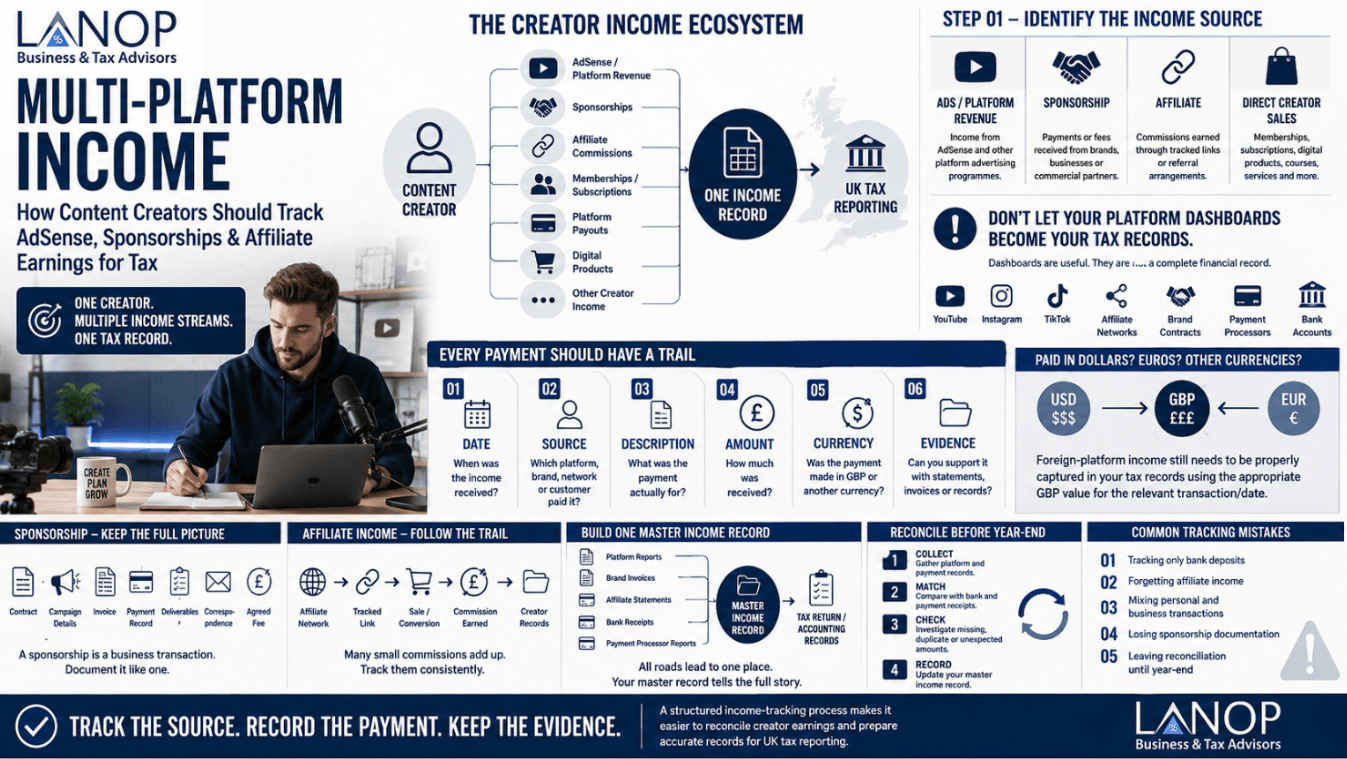

A creator can earn from YouTube AdSense, a TikTok bonus, an Instagram sponsorship, an affiliate link and a Patreon subscription. All in the same month. Earning the money usually isn’t the hard part. Knowing what to record, and how to pull it into one accurate tax picture, is where most creators end up Googling accountants for content creators at 11pm.
Every platform pays on its own schedule. Different currencies, different fees, different payout thresholds. This piece covers how to track each income stream, reconcile statements against your bank account, deal with foreign currency, understand the £1,000 trading allowance properly, and dodge the mistakes that trip up multi-platform creators most.
Why Multi-Platform Income Is Difficult to Track?
One creator might run AdSense, TikTok, sponsorships, affiliate commissions, Patreon, tips, and the odd gifted product, all at once. Each one has its own dashboard. Its own rhythm.
Your bank statement won’t tell you the full story either. Earnings differ from payouts once fees get deducted. Payments turn up late. Transactions get bundled together. Currencies get converted somewhere along the way. Honestly, you can’t reconstruct your creator income from a bank statement alone. It shows what arrived, not what you actually earned.
What Counts as Income for a UK Content Creator?
AdSense income, sponsorship fees, affiliate commissions, Patreon and membership income, tips, merchandise, digital products, and commercial gifted products. All of it counts. The point here isn’t to unpack every single type in depth. It’s to help you organise them into one clear number.
Do You Combine Income From YouTube, Sponsorships and Affiliate Marketing?
You do. Different platforms are just different income sources feeding the same business activity. They’re not separate businesses, and they don’t get separate tax treatment.
Say a creator earns £8,000 from AdSense, £12,000 from sponsorships, £2,500 from affiliate commissions, and £1,500 from TikTok. That’s £24,000, and it all lands on one consolidated tax record. You don’t need a separate Self Assessment return for each platform. Just one return, covering the whole picture.
How to Track YouTube AdSense Income?
Record the date, gross income, currency, any fees, the amount actually paid, and the supporting statement. AdSense moves through a chain: gross income first, then deductions, then a payout lands in your bank. The bank figure is the last step, not where you start.
Google might also ask for US tax information at some point. Any US withholding is a separate matter from your UK tax bill. Keep the paperwork, but don’t assume it settles anything with HMRC.
How to Track Sponsorship and Affiliate Income?
For sponsorships, record the brand, the campaign, the invoice amount, the payment date, the currency, and anything you received alongside the cash. A deal isn’t always just money. Non-cash extras still count. Keep emails, DMs and contracts too, since they’re often the only record of what was actually agreed.
For affiliate income, keep separate categories per network. Small commissions add up faster than people expect, and ignoring them because each one looks trivial catches up with you eventually. Also worth remembering: earned, payable and received are three different figures, not one.
Which Figure Should You Record: Gross Income, Payout or Bank Receipt?
Gross income is what you actually earned. Fees and deductions should sit visibly on their own line, not buried inside a final number. What lands in your bank is the net amount, once everything’s already been stripped out. The chain runs from platform statements, to gross income, to deductions, to payout, to bank transactions. Don’t just copy bank payments straight into a spreadsheet without checking what they actually represent.
Your Platform Reporting Period May Not Match the UK Tax Year
The UK tax year runs from 6 April to 5 April. YouTube, and plenty of other platforms, tend to report on a calendar-year basis instead. Reconcile against the real UK tax year, not whatever period the dashboard happens to default to.
How to Handle US Dollars, Euros and Other Foreign Currency?
USD AdSense, EUR sponsorships, overseas affiliate income. All of it adds a currency layer on top of everything else. Record the original amount, the currency, the date, the GBP equivalent, and where the exchange rate came from. If a platform converts the money automatically, keep the transaction record rather than trying to remember the rate later.
What If You Earn the Money Before You Receive It?
Say a £2,000 sponsorship gets agreed in March but paid in April. Depending on whether you use cash basis or traditional accounting, that income might actually belong to a different tax year than you’d assume.
Does the £1,000 Trading Allowance Apply to Each Platform?
Myth: “I earned less than £1,000 from each platform, so none of it needs reporting.”
Reality: it’s one allowance for your whole creator business, not £1,000 per platform. £700 from YouTube, £200 from affiliate income and £300 from sponsorships adds up to £1,200. That’s over the threshold, even though no single platform crossed it on its own. And crossing £1,000 doesn’t mean paying £1,000 in tax. It just means you likely need to report.
What If Content Creation Is a Side Hustle?
A PAYE job doesn’t cover your creator income automatically. Your employer’s payroll handles your salary tax and nothing beyond that. A full-time employee earning from YouTube still needs to look at Self Assessment for that income on its own terms.
What About VAT When You Have Multiple Income Streams?
VAT depends on total taxable turnover, not on treating every pound the same. Advertising revenue, sponsorships and digital products can each need slightly different VAT treatment. Income tax, VAT and overseas withholding tax are three separate questions, not one.
What Expenses Should Content Creators Track?
Cameras, microphones, editing software, subscriptions, travel. These are the usual creator expenses. Equipment used personally as well as for content needs a fair split, not a blanket claim for the whole cost.
How Should Creators Organise Their Financial Records?
Build one master income tracker. Date, platform, income type, gross amount, currency, GBP value, fees, net payout, supporting evidence. Then reconcile it regularly, working through platform, tracker, bank, and finally your tax records.
Common Multi-Platform Tax Mistakes Content Creators Make
Treating each platform as its own £1,000 allowance. Recording only what hits the bank account. Ignoring small affiliate commissions. Forgetting foreign-currency income. Mixing up gross income with net payouts. Ignoring platform fees. Forgetting commercial gifts tied to paid work. Blending personal and business spending. Waiting until the deadline to reconstruct everything at once.
When Should a Content Creator Get Professional Accounting Help?
Worth bringing in support once you’ve got several income streams, meaningful sponsorship income, foreign payments, VAT questions, commercial gifts, or Making Tax Digital obligations creeping up on you. This is usually the point where accountants for content creators stop being a nice-to-have and start actually saving time and money.
Frequently Asked Questions
Do I have to combine YouTube and sponsorship income for tax?
Different platforms are simply different income sources feeding one business activity, not separate businesses in HMRC’s eyes. They belong on the same tax record.
Does the £1,000 trading allowance apply separately to each platform?
The allowance covers your combined creator income across every platform, not a fresh £1,000 per source. £700 from YouTube and £300 from sponsorships already push you over it together.
Which figure should I record: gross income, platform payout or bank receipt?
Start with gross income and show fees and deductions on a separate line. The bank figure is the final step, after everything’s stripped out, not the starting point.
How do I handle income received in US dollars or other foreign currencies?
Convert the amount to GBP using the exchange rate on the date you received it. Keep evidence of that conversion, since it matters once several currencies get involved.
Do gifted products count as creator income?
A gifted product tied to a paid or commercial arrangement generally counts as income, even without cash changing hands. What matters is what was expected in return.
Conclusion
Multiple income streams don’t have to mean chaotic records. The fix is dropping the habit of treating each platform as its own isolated pot of money, and building one consolidated system instead, covering income, fees, currency, expenses and payments in a single place.
Reconcile platform statements against your bank account through the year, not just at deadline time, and revisit your VAT and MTD position as the business grows. If pulling all of this together feels like more than you want to manage alongside actually making content, Lanop Business & Tax Advisors works with creators to bring every platform into one clear, tax-ready picture.